Daisy O’Shea’s Historical Fiction: The Best of Both Worlds
31 August 2026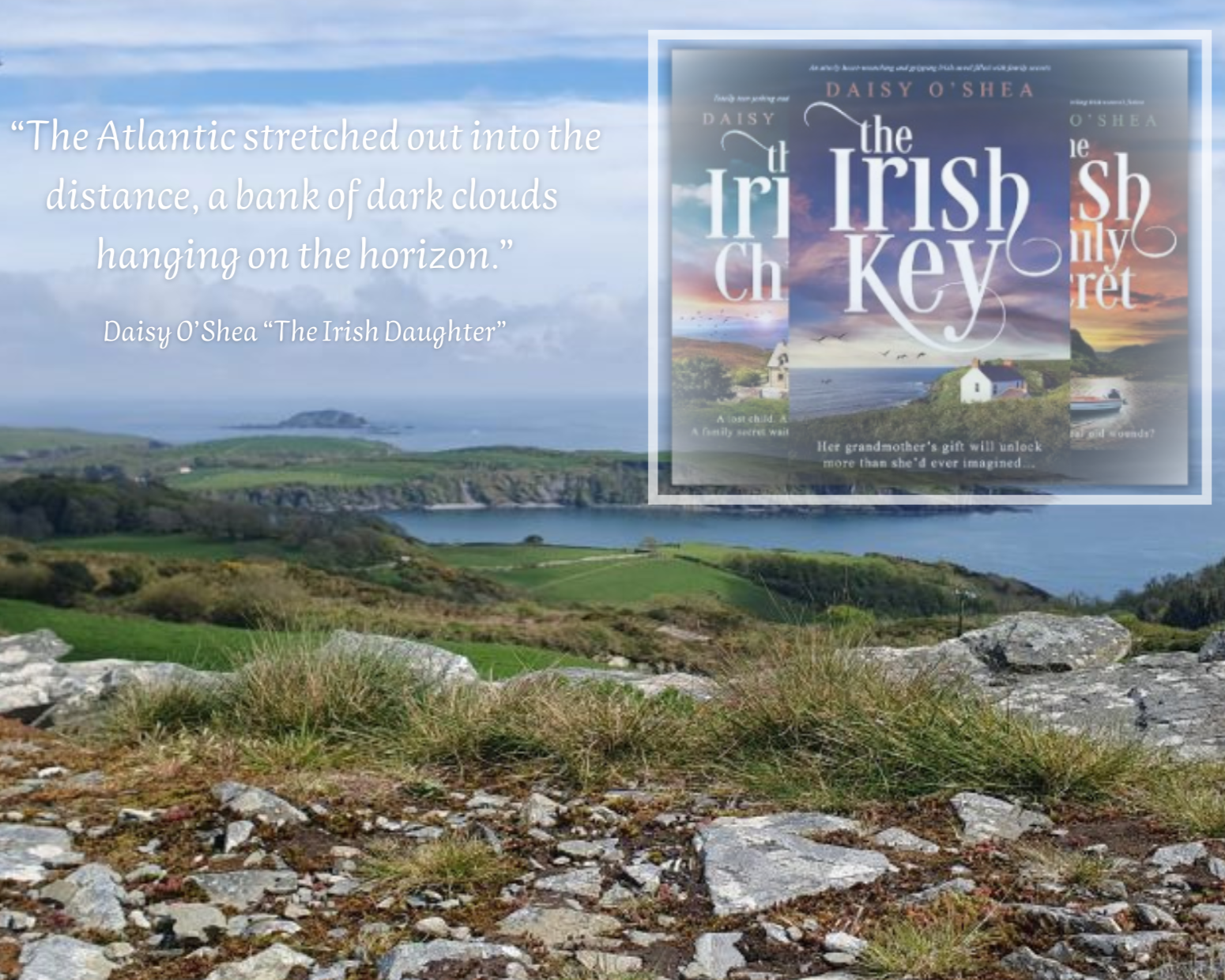
For the longest time, I believed reading had to be educational. I would plough through books in foreign languages or non-fiction just to avoid “wasting my time.” When classmates genuinely seemed to enjoy the classics we had to read for the Leaving Cert, I felt dumb and embarrassed; I usually opted for the simplified, short versions just to get through the content. Sitting down to enjoy a book purely for its writing wasn’t something I did. To me, reading meant the accumulation of knowledge, and it often felt like a chore.
It is not surprising that I read less and less over the years. Only when I was on vacation, or had no other distractions available whatsoever, would I allow myself to read an entertaining book. Over time, I even became fearful of reading. Going to bed, I wanted to read a good book rather than scrolling on my phone. But how could I find a suitable story to help me drift off when I had built a barrier of constantly needing to feed my brain with “useful” things? By the end of the day, I was simply too tired for it. Instead, I often ended up frustrated, reluctantly staring at my phone screen once again.
“Writers Need to Read”
“If you want to be a good writer, you should read as much and as widely as possible.” This advice gave me the perfect excuse to broaden my horizons with fiction. For “research purposes,” I explored genres that I wouldn’t even have considered before and devoured all sorts of light reading. After treating myself to some trashy beach reads in German, I found my way to historical women’s fiction. Going by their often corny cover designs, I wouldn’t have wanted to admit that I enjoyed them a while ago. But I can wholeheartedly say now that the historical fiction by Daisy O’Shea offers the best of both worlds for me.
Finding the Best of Both Worlds
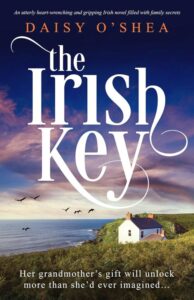
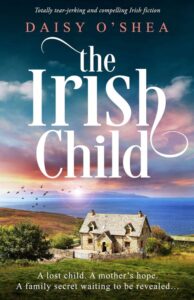
Daisy O’Shea’s historical women’s fiction series, Emerald Isles, quite literally gives me the best of both worlds. By switching her storytelling between the present day and the past, she offers a fantastic insight into the contrasts and connections between the two eras. She strongly develops her main characters throughout her books, beautifully capturing their struggles and emotions within the setting of their respective time periods. Through these fictional, yet deeply touching life stories, I found myself transported right into the middle of the gorgeous landscape of West Cork—or into the harsh conditions of the past century.
Each book in the Emerald Isles series follows the classic narrative arc of introduction, struggle, peak, and resolution. Yet, every story feels completely original. The characters come with their own unique history and background, keeping me on the edge of my seat every time. The fictional coastal village of Roone Bay and the rough countryside around it, loosely connect all the protagonists, with some of them making appearances throughout the series.
The Art of the Perfect Description
I am not a fan of flowery, overly descriptive writing that conveys little information. Trying too hard to paint a picture that ends up as purple prose is just not for me. Nor do I like a curt or crude tone in a novel. Daisy O’Shea, however, has a wonderful way of describing a scene. While she certainly paints a picture, she doesn’t use any surplus words, succeeding in sucking me right into the story every time I open the book.
She delivers exactly what I expect to gain from reading for pleasure: a parallel world that I can’t wait to get back into at the end of the day. Her ability to convey historical circumstances without simply citing facts is amazing. Her stories have encouraged me to dig deeper into Irish history, reflect on deep-seated prejudices, and build genuine compassion for her characters.
While other books before have sparked my interest in specific destinations, never have I felt so drawn to visiting the setting of a story as I did after reading the Emerald Isles series. Hence, when we planned one of our little getaways over the May Bank Holiday weekend, I insisted on going to West Cork!
From The Pages to West Cork
There was a faint hint of salt on the air. The sky was endless blue, the hilltops standing stark and bleak. The ever-present Atlantic drifted serenely below, uncaring of all our human foibles. There, where the rugged rocks perch on our isolated hillside, where the winding boreens, threaded with ribbons of grass, are lost in the rolling landscape, it was as though nothing had changed for a thousand years.
(“The Irish Daughter”, Daisy O’Shea)
With three excited kids caring little about my reading experience, I had a bit of a hard time imagining West Cork as it must have been for Daisy O’Shea’s protagonists arriving in Roone Bay for the first time. Nevertheless, even for us—after five and a half hours of travelling in heavy traffic from Co. Wicklow—our arrival was serene.
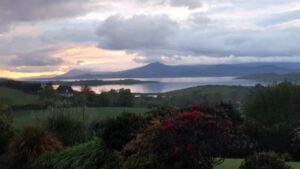
Our accommodation was located on a hill just outside of Bantry, overlooking Lough Bofinne just as the sun set. Travelling the winding roads towards Mizen Head the following morning revealed the beauty Daisy O’Shea described to its fullest. Despite the glorious sunshine and temperatures warm enough to bathe in the Atlantic, we had some of the most spectacular spots completely to ourselves.


A Landscape Shaped By The Great Hunger
I pass the occasional stone cottage, some still inhabited, some silent wrecks speaking of past tragedy. The rocky slopes might once have been dense with sessile oak, the skyline broken by the odd Scots pine, the lower landscape covered with vast swathes of deciduous forest, but not any longer. Centuries of population have seen the landscape largely deforested, meeting human needs: farmland, wood for houses and tools and warmth.
(“The Irish Family Secret”, Daisy O’Shea)
On this trip, the derelict stone dwellings in the unspoilt nature meant more than just a romantic photo motif to me. They came with an understanding and admiration of the hardship people had endured during the Famine in rural Ireland, and particularly in West Cork. The Skibbereen Heritage Centre provided a deeper insight into the history that Daisy O’Shea so beautifully explores in her novel, The Irish Child.
Off the Beaten Track – Knockdrum Fort
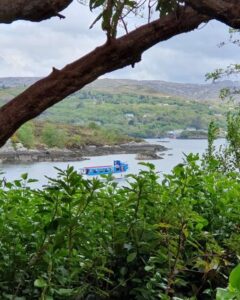
My personal favourites are places with little tourism infrastructure. While we thoroughly enjoyed our ferry trip to Garnish Island—with the seasoned boatmen expertly navigating us close to Seal Rock to get the best photos—it was an experience we shared with plenty of other visitors. Garnish Island is stunning and absolutely worth a visit. We went early in the morning and truly enjoyed the calm before the storm.
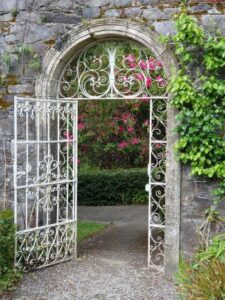
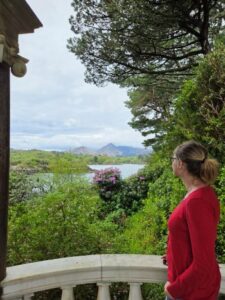
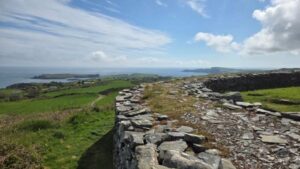
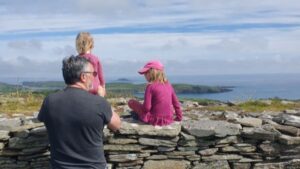
Nevertheless, the most memorable and breathtaking sight for me was Knockdrum Stone Fort. We found it via a flimsy signpost at a concealed entrance that looked like nothing more than a path up to a field. And indeed, it led us to a track along a field with barely enough space for one car to stop, overlooking the rural townlands stretching towards Skibbereen. The sun was beating down, even though rain and dull weather had been predicted. I carried my three-year-old up the eighty steps leading away from the farmland and up to the ancient ringfort.
The characters from The Irish Family Secret, Molly and Davan, popped into my head. Although they are fictional, I wondered what they would have felt like walking these very same paths on hot days like this—or in the freezing cold—at the beginning of the previous century.
When we reach the rath, it becomes obvious why it’s there, on the brow of the hill. It commands a sweeping view of Bantry Bay, with all its tiny inlets,…
(“The Irish Family Secret”, Daisy O’Shea)

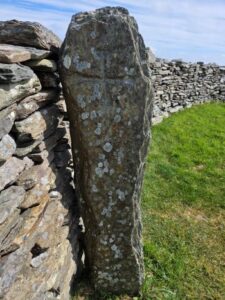
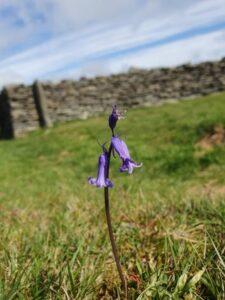
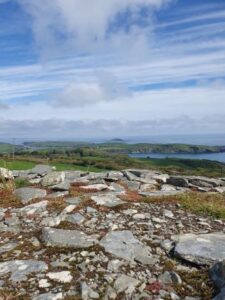
The views from Knockdrum Fort over the Atlantic were absolutely stunning. I can see how this landscape gives Daisy O’Shea endless inspiration for her historical fiction, set in different times of Ireland’s recent past. After returning from our short trip to West Cork, I felt inspired and energised myself. It showed me once more in what a beautiful country I live for which I am hugely grateful.
Historically, owning land in Ireland can breed a love of the landscape into a person, as it has me. But not always. Some who inherit just see the land as a resource to sell or generate an income, missing the whole beautiful, somewhat ephemeral sense of past, present and future all being part of the same moment.
(“The Irish Family Secret”, Daisy O’Shea)