
Four German Rural Living Concepts for Ireland
9 May 2021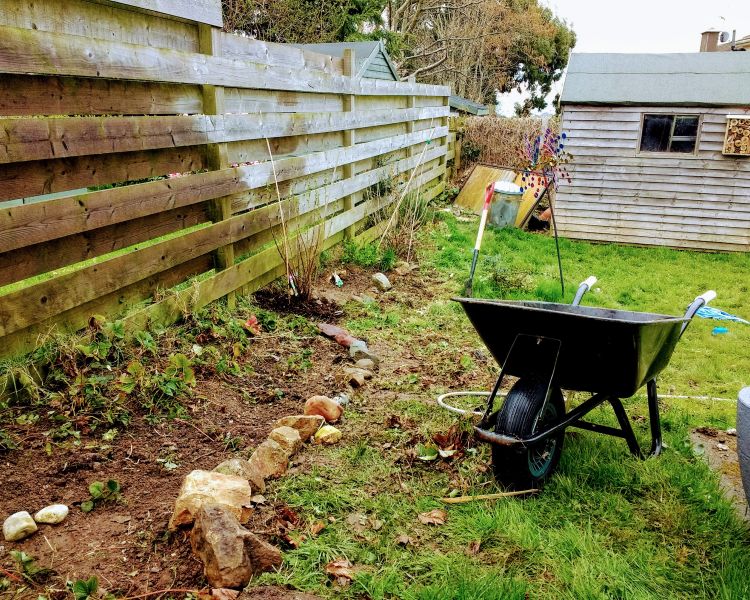
From Dublin City Life to Rural Living in Wicklow
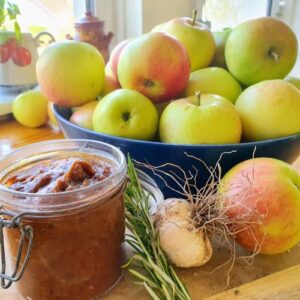

Like many on the verge of starting a family, we left our apartment in Dublin for a more spacious, rural alternative in Co. Wicklow. Sometimes we still can’t believe how lucky we were finding our perfect family home after just one viewing. The house and its location in the gorgeous seaside town of Greystones offer everything we had been looking for.
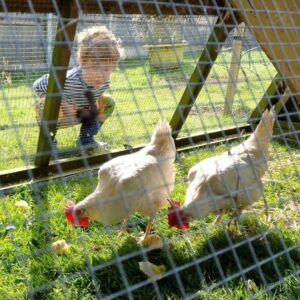
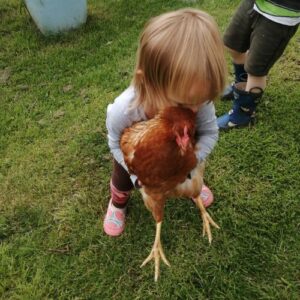
We didn’t exactly acquire a farm, but my husband John likes growing vegetables in the sizable wrap around garden. I love my herb and flower bed as well as our little orchard, supplying yummy fruit and shade. The kids have plenty of space for activities and their own little playground. Since we bought chickens just before Easter this year, I fondly call it our Payne FARMily.
Paved Backyards and Outsourced Gardens
Unfortunately many people don’t choose Wicklow for its rural setting. They just want to transfer their urban style of living to a more affordable region, putting uniform housing estates with minute natural components at high demand. Their manicured or even paved back gardens lack individuality and draw their residents to artificial recreation and play areas. But it might be exactly this trend that lets a concept re-emerge which has always been common in Germany: allotment gardens.
The allotment gardens started as as an organised, intended-purpose movement around the city of Leipzig in the 1860’s. Named after the physician Dr. Moritz Schreber, gardens on the outskirts of cities were developed to create healthy environments with fresh air for children who were growing up in industrial areas. Whilst much has changed since industry-polluted Germany in the 19th century, the concept of an “outsourced garden” remains the same.
1) An Old New Concept: Allotment Gardens in Wicklow
“Tírmór allotments [in Newcastle] is all about increased biodiversity and soil quality“, says Huw O’Toole in the Greystones Guide, “and how farming used to be done before we thought we could cheat nature. Construction impacts can lead to increased flooding and I am planning to counteract negative side effects like that by going back to the roots.“
Aimed to be completed within the next 5 years, Huw is converting parts of the 150 year old family farm just outside Newtownmountkennedy in Co. Wicklow into allotments of various sizes. “In combination with the Jacksmill work hubs, people can spend their lunch break planting their own veg“, Huw says with a smile. A fantastic solution for people who prefer a low maintenance garden attached to their house, but would like to give home growing a shot anyway.
Germany – A Trendsetter for Rural Living?
Whilst the so called Schreber-Gärten (allotment gardens) are still popular in Germany, about 41% of Germans could imagine to move somewhere rural permanently. Especially during the pandemic, when proximity to the work place became redundant, people take advantage of their newly gained flexibility and flee the packed cities in favour of rural living.
But even before the pandemic the image of country life has changed in Germany. It is no longer seen as outdated lifestyle between boring fields and smelly cow stables. House prices in rural areas in Germany have increased by 40 % in the past 4 years. It used to be high costs and small living space that forced young people out of the cities. Now more people choose rural living, hoping for a higher-quality family life. To make it more accessible for young professionals, some pretty trendy rural living concepts have emerged. My interest was piqued when I watched a documentary that introduced trendy concepts for rural living:
2) Workspace & Community – Trial Run for Rural Living
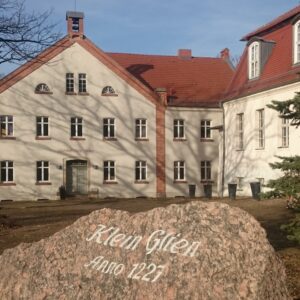
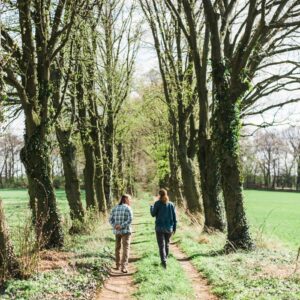
Committing to buying your own property far out in the countryside can still be a challenge despite working from home. Limited accessibility, none or little public transport and usually few facilities nearby – to name a few. Coconat, about an hour South-West of Berlin, is a great project to live in the countryside ‘on trial‘. “It is perfect to get a feel for country life“, says Svenja Nette, a 35-years old blogger. „Am I made for country life and is the country life made for me“, she continues. That is what you can find out as a guest on the expansive former country estate in Klein Glien.

© Coconat
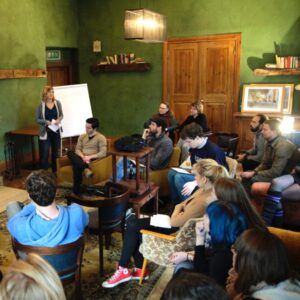
Klein Glien is a tiny village with not more than 80 residents in the federal state of Brandenburg (surrounding Berlin). Similar to Jacksmill in Co. Wicklow, Coconat offers a co-working environment, but with an attached living space for flexible professionals. Currently the majority comes from the nearby capital of Berlin. Instead of living or working in a single household, they can join a group of like-minded people from different backgrounds.
In the communal area – a huge converted barn – guests can socialise, share ideas or enjoy the peaceful surroundings on their own. Some only stay for one night to work on an assignment. Others book in for weeks or even months, working and contributing to the community. Apart from looking after their guests, the three founders Julianne Becker, Janosch Dietrich and Iris Wolf make sure to keep the locals in the loop. “It was important to us to respect the views of the people in Klein Glien and that they accept us in return”, says Julianne. The estate now hosts the annual village festival, for example. A fantastic gain for the formerly deserted estate and its surroundings.
3) Upcycling a Town – “Your Year in Loitz“
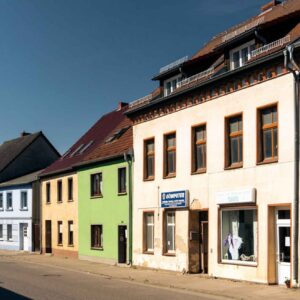
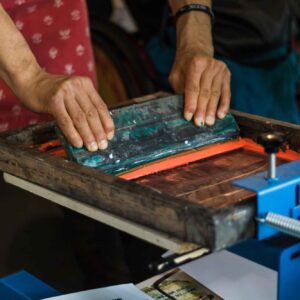
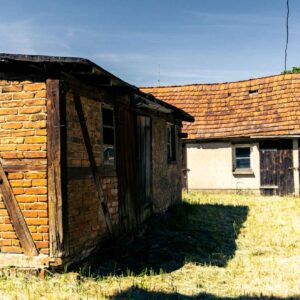
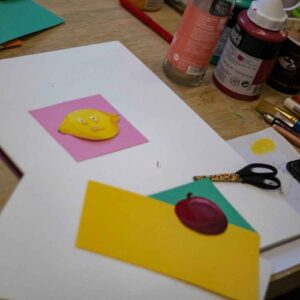
Annika and Rolando, a creative couple from Berlin, have also moved into a formerly abandoned house. It is located in the small town of Loitz in Mecklenburg Vorpommern, a sparsely populated county in the North of Germany. They were chosen out of 93 applicants to receive a monthly base income of €1000 and rent-free living for a year. In return they are going to convert the empty shell of a house into a livable space and contribute to the local community.
The initiative is called ‘The City of Future 2030’ and was a was a great win for the 4300-resident town. Loitz beat competitors such as Berlin and Freiburg, among other big cities. The project is designed to brush up the the image of the infrastructurally weak region and to make remote living attractive to young people.
Supported by ambitious neighbours and volunteers, Annika and Rolando are eager to turn their creative plans into reality. This way they can benefit from the peace and quiet of rural living, and revive a slumbering town at the same time. A hopefully permanent win-win situation that could you be a fantastic chance for some neglected Irish towns too.
© Dein Jahr in Loitz
4) Multi-generational Living 2.0
Not only where, but also how people live seems to be undergoing a shift towards more traditional ways. My friend Julia recently gave up her convenient city centre apartment in Hamburg to move to a multiple generation living space about 160km further North. “It takes a village to raise a child. And that is my hope for our new home in Freiland Flensburg, she tells me“ Julia is a single mother with a 5-year old daughter. Living and working in Hamburg has suited her in the past years. “Now it is time to move on“, she tells me. “My grandad was originally from Flensburg. Maybe it is a sign that we found exactly what we were looking for here.“
Freiland Flensburg is a campus close to the city centre of Flensburg containing different forms of residential spaces. It includes apartments for single households, different size houses for couples and families, as well accessible units for senior citizens. The main building provides communal space such as guest rooms, a kitchen, a roof terrace and an atrium in the centre. The idea is to offer support for everybody who wants (or needs it) and to profit from the vast skills set of the variety of residents.
“I won‘t need to worry when my daughter is playing outside“, Julia says. “There are always going to be other kids around. Or I can drop her off with a neighbour when I have to run a quick errand or work.“ Julia on the other hand offers support in digital matters to elderly people, or teaches students how to use a sewing machine. On holidays they often bake together. A great traditional barter system in a modern environment and solution to the shortage of living space. Also for Ireland!?
Between Tradition and Modern Rural Living
Above living concepts show that the wheel doesn‘t have to be re-invented. We can absolutely learn from what generations before us did well or even take a peek at other countries. By just giving it a modern twist, it can turn into something innovative and sustainable.
When I was a teenager I didn’t appreciate rural living, nor did I see myself settling in the Irish countryside. The older I get, the more I learn to value traditional concepts of living. I enjoy home growing and cooking food from scratch. I think it is intrinsic wanting to provide for your family. It also is very satisfying creating something with your own hands. I enjoy showing our kids how things grow and what you can make out of them. Moreover I am amazed how little we actually need for a happy life. Here is to rural living!