
Eternity vs. Convenience: Finding Beauty in an Irish Wake
23 October 2026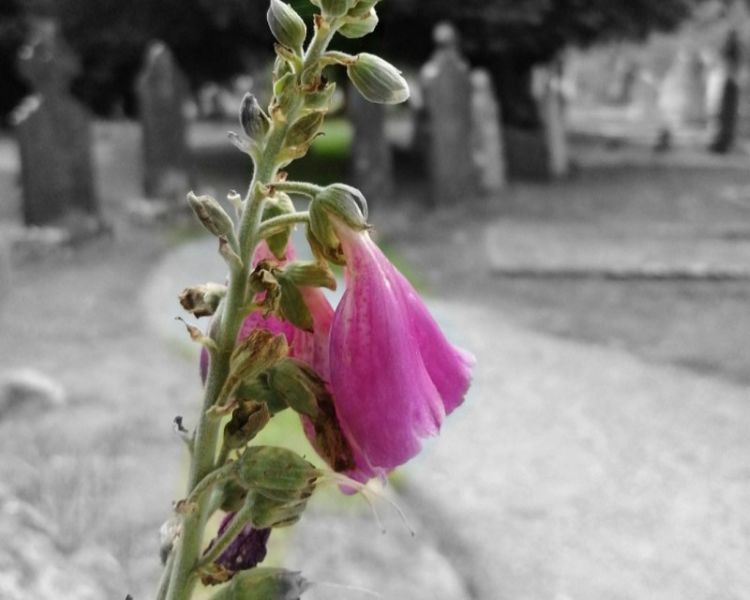
Until my mother-in-law passed one year ago, I had never been to an Irish wake. I had heard and read about it, and had lots of ideas in my head about what it was like: big gatherings of family and friends, paying their respects to the deceased, with a good bit of drinking going on. I can’t really say that I was looking forward to attending one, but after I had, I thought it was beautiful.
Irish Eternity vs. German “Rental Graves”
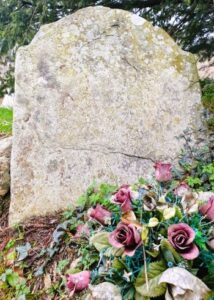
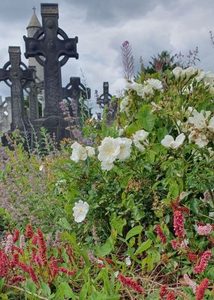
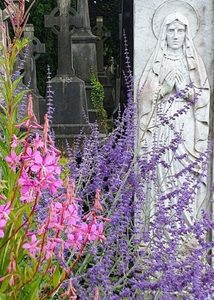
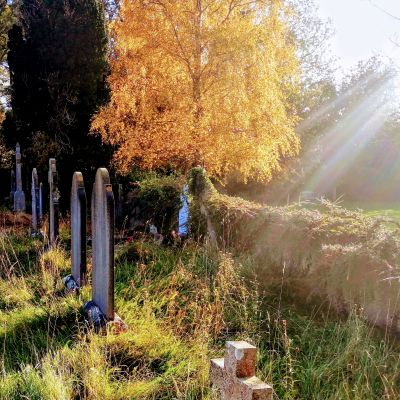
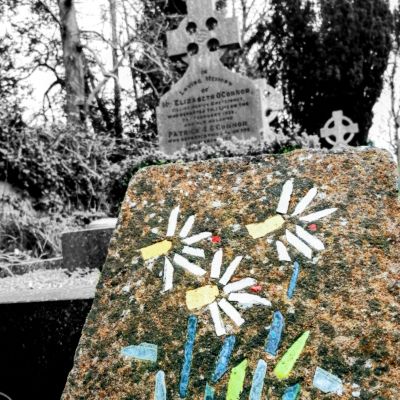
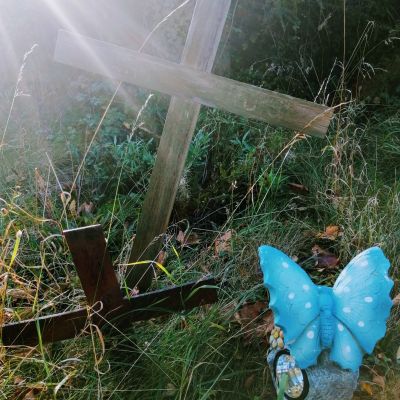
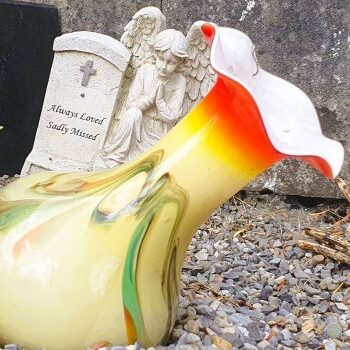
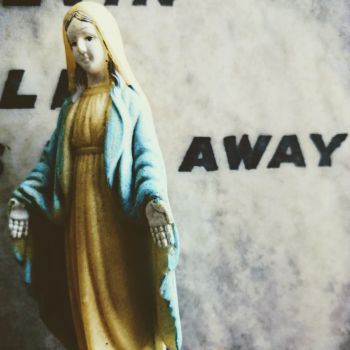
Beautiful is also how I would describe Irish graveyards. At least the old, long forgotten ones. Surrounded by stone walls, overgrown with lichen and ivy. Withered high crosses leaning, inscriptions barely visible any longer. Still sought out by people like me who appreciate the peace and stillness in this graceful imperfection. There is a beauty in the way the graves lie unattended. The odd wreath, or a tiny Mary figurine carefully placed on a heavy headstone. Powerful spots of colour amidst the grey and green.
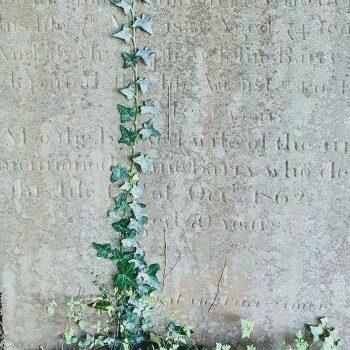
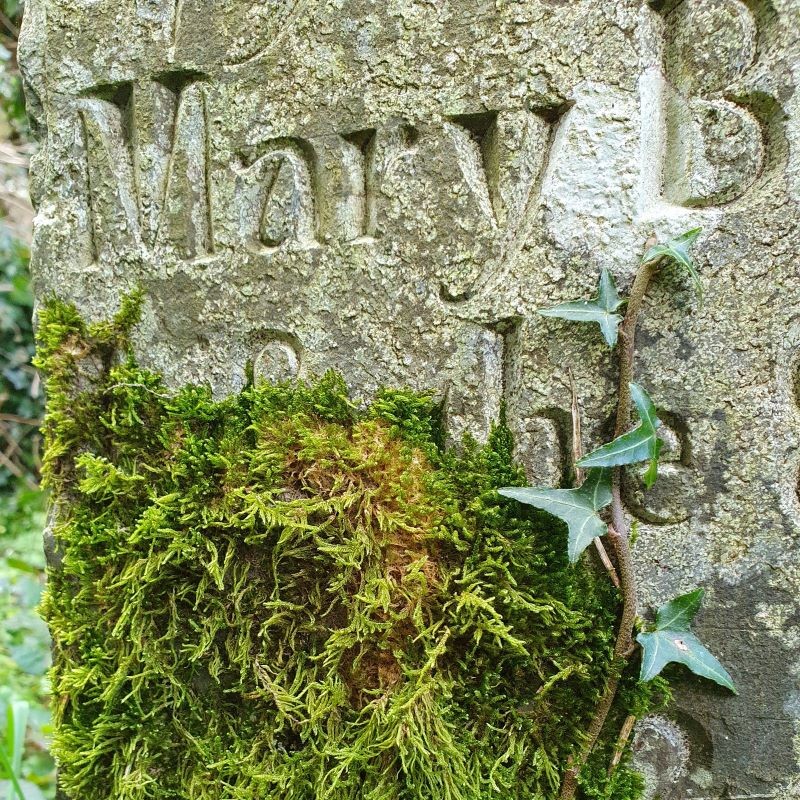
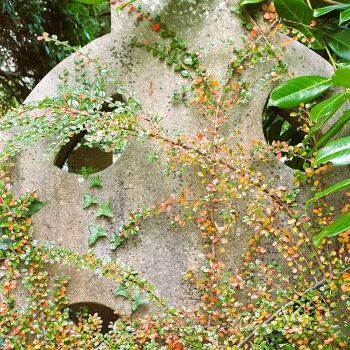
Graves in Ireland don’t “expire” like in Germany. People usually buy a grave site for eternity and future generations to use. Hence you can find headstones that date back to as far as the 17th century. Another aspect that makes a walk through Irish graveyards so interesting to me.
In Germany, people would be appalled at the sight of neglected graves. Paths must be raked and flowers fresh at all times—at least for the 25-year lifespan of a common German grave lease. Once that duration is up, the grave is cleared unless the family pays to renew it. The only exceptions are the graves of famous emperors or military generals. These historical graves are highly popular in Germany, meticulously maintained and frequented for anniversaries to celebrate heroic deeds.
A Canvas of Grief
But even back in Germany, I always enjoyed taking long walks through graveyards, especially around this time of year. When colourful leaves add their special magic to neatly kept plots and straight rows of headstones. Grave maintenance in Germany is heavily bound by rules and regulations – enforced with ‘warning letters’ when people use the wrong plants or materials on a gravesite.
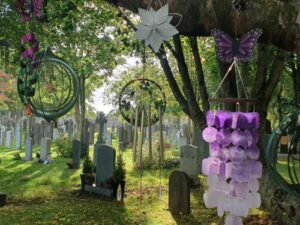
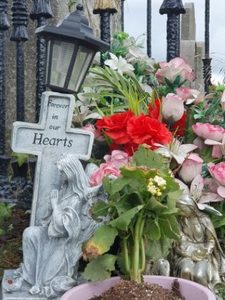
Not so in Ireland where graves are individually decorated with whatever people see fit. Families use them as a canvas of grief, often displaying tacky elements like solar lights, sports flags, wind chimes or cuddly toys. All of which the cemetery maintenance authority in Germany would remove. In Ireland the personal memory of the person and the freedom to express grief supersede rigid regulations.
Funerals in Germany: A Lot to Consider
Fortunately I haven’t attended many funerals in my life. And the ones I did were those of my elderly grandparents who passed away the way I wish I will one day: surrounded by family, knowing that they lived their lives to the best of their abilities and circumstances.
Watching my parents organise the funerals, I knew there was a lot to consider: burial or cremation, flowers, music at the service, etc. All that while grieving for a beloved one and coming to terms with losing an important person in your life. I thought my family was very thoughtful each time, and making arrangements that respected the last wishes of the deceased.
Done & Dusted
The funeral services were always dignified, with personal eulogies and a get-together afterwards. But everything happened within hours on one single day. Sometimes we had a separate gathering to bury the urn of ashes a few weeks after the memorial. But not at my late granny’s funeral where we held the entire service with just her ashes. Her photo placed on the small vessel that contained the cremated remains of a remarkable person.
I didn’t think much of it at the time. I cried; smiled at the many nice memories I had with my ‘Oma’, remembered her when she was alive. But it was hard to process that she was actually gone. Not having seen her on her death bed, nor bidding my farewells at a coffin.
Funerals in Ireland – A Mourning Process
I didn’t realise all that until my mother-in-law passed last October. She too was in her 90’s and survived by an exceptionally vast family (my husband has well over 100 cousins). I was able to visit her in the last days of her life and this was when the mourning process began. When she passed on, she wasn’t secretly ushered out of her nursing home. Both staff and family formed a guard of honour along the corridor, paying their respects in silence. A momentary standstill of day-to-day business, solely to honour her life.
The Irish Wake – A Cliche?
In Ireland the deceased is never to be left alone until buried. That is where the term “wake” comes from. An old Irish tradition of keeping watch and staying awake with the dead. Family and friends take turns to watch over the body, usually in the home of the deceased. Plenty of food and drink accompany the Irish wake which probably led to the cliche how Irish wakes are portrayed in books and movies. I came to know that it wasn’t so much of just a cliche after all.
When we attended my mother-in-laws Irish wake in her house, I met plenty of family members that I had never seen before. It was a huge gathering of extended family, neighbours and friends. Among them a big bunch of grand- and great-grand-children. Hence not much drinking going on. But there was plenty of homemade food going around, and a lot of helping hands to arrange the catering.
The open coffin stood in the front room, off to the side. As a German, where this is not custom at all, it was slightly uncomfortable for me at first. I was hesitant to have our three children viewing their granny in an open coffin, but they all chose to. It turned out to be the right thing to do and brought a lot of closure and understanding. Whilst our then 2-year old still believes her granny is ‘sleeping in her home’, the older ones appreciated seeing her.

Together till the End
Her sons and grandsons carried the coffin out of the house, the rest of the family formed a guard of honour. The funeral service in her local church was beautiful. Family members brought memories back to life, and placed things dear to her on the altar. Her five children rode with her in the hearse on the way to her final resting place. The people closest to her heart with her for her last journey on earth. Another beautiful and very powerful gesture.
But times in Ireland have changed too. Gone are the days when traffic stopped dead at the approach of a funeral procession, at least in urban Dublin. Maybe it is different in rural Ireland, where showing respect for a passing hearse is still sacred. Back in 1951 it was taken so seriously that the Mayo football team was cursed to a 75-year championship drought for allegedly disrespecting a funeral procession. That curse was finally broken with a historic victory a few months ago.
The Rise of the “Convenience Funeral”
Whether it is due to superstition or valuing traditions, Ireland is luckily not on the fast track to convenience funerals yet. Despite exceptions that can lead to postponed funerals in modern Ireland—like the lack of available priests or increasing cremation rates in urban areas—traditional funerals remain predominant.
When somebody dies in Ireland, other matters of the family revolve around it. School and work come to a standstill. Giving the deceased a proper and timely send-off has number one priority. There is no “delay” of the grieving process for convenience reasons. Deceased are usually buried within two to three days.
Increasing Cremation Rates
Convenience scheduling of funerals only works with cremations that give families more time to plan, and drop the immediate memorial service at the same time. Moving it to a desired date gives family members abroad a chance to attend funerals. The Vatican explicitly permitted cremation for Catholics in 1963. But until the end of the 1980’s when the first crematory opened in Glasnevin Cemetery, there was no infrastructure available to facilitate it. (The historic Glasnevin Cemetery in Dublin is absolutely worth a visit, and I included a walking tour of it in my published book.)
In Germany, on the other hand, the big breakthrough of cremation already happened in the 1990’s. Due to the division of Germany into East (Communist) and West (Capitalist) Germany, cremation rates started to rise in East Germany first, in order to weaken the influence of the Church in the GDR. But since the reunification in 1990, cremation has steadily increased to become the preferred funeral choice overall, with slightly lower rates in Catholic areas.
Delayed Grieving
Whilst I am that person who lives abroad and would need to travel to attend a family funeral back home in Germany, I am not a supporter of convenience-scheduled funerals. It delays the grieving process and takes away from the impact the death of a person has on those around them.
There should be no “Let me get all my ducks in a row before I can attend the funeral.”
I have heard of funerals in Germany getting delayed by weeks to facilitate holidays, avoid a burial over the Christmas season, or simply so people won’t have to take time off work. Funeral services with a coffin are getting replaced by a stripped-down, one-stop urn memorial. Of course, it is also convenient for me if I only have to travel once. But don’t we want to give our loved ones the most special farewell we can?
German Funeral Trends…
Convenience not only reflects on the funeral service itself, but also on how and where people are buried. Trends such as the Friedwald or Ruheforst (official forest burial grounds) in Germany have ranked high since the first one opened in 2001. Today’s estimates suggest that the ashes of every fourth or fifth cremation are laid to rest in a designated forest. Instead of a classic gravesite that needs to be tended to, the ashes blend into a natural space with small plaques to mark the spot.
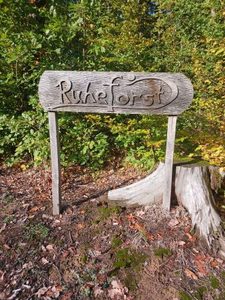
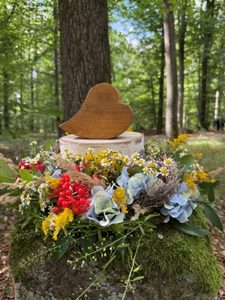
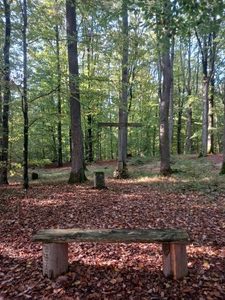
Whilst practical elements play an important part, many people also like the idea of having their final resting place underneath a tree, becoming one with nature again. I know that my mam would like it for herself. Having lived near a forest all her life and knowing that we won’t be nearby to look after her grave, she has recently mentioned it to me. And I respect that.
…vs. Irish Traditions
I don’t need a gravesite to remember a loved one. And I can see the convenience in just having a personal memorial space close by. However, I deeply valued the different stages of farewell when my mother-in-law passed.
Despite my initial reservations towards the public viewing, it was a crucial part of my grieving process. There was nothing ugly or scary about it—just a sad, but respectful goodbye. Seeing her so peacefully, hands folded, wearing her heavy, golden cross necklace. Only her familiar smile had vanished. At the coffin, our kids asked lots of questions, and nobody shushed them, nor sugar-coated the answers.
Which Way to Go?
I didn’t make it to my Granny’s deathbed because I live in Ireland. And I was happy enough to remember her the way I had last seen her a few months before. But if I had to choose between a modern German funeral or a traditional Irish one, I would choose the latter.
Death should remain a visible part of our lives, not an inconvenience to fit into our busy schedules. Even if it means booking an expensive last-minute flight and dropping everything, facing the reality of loss as it happens beats the convenience of a delayed and stripped-down farewell.
And yes, the world keeps turning when a loved one dies, but for the survivors, it should stand still just for a few days to celebrate their life and commemorate their passing.
Beautiful written.
Irish wakes are a slow good bye.
Thanks Rebecca! Yes it was a slow and beautiful goodbye 🙏.
Nicht nur ( wunder-)schön geschrieben, sondern auch nicht einfach zu Lesen. Dabei kommen Emotionen wieder hoch an Abschiede die wir schon vollzogen haben. Angefangen bei meinem Opa Albin W. in The. In dem Dir noch bekannten alten Bad, was sein Sterbezimmer war, weil es bis 1967 auch sein Wohnzimmer gewesen ist. Sicherlich bei C. an den Abschied von ihrem Großvater Willi R. (1957!), der sie über alles geliebt hat. Im Haus Am Wald. Über meine kleine mütterliche Oma Erna L. 1983 daheim im “Südflügel” verstorben, kurz nach Deiner Geburt. Die ich ihr noch verkündigte. Nicht zu sprechen über die Abschiede unserer beider Eltern. Ob dazu die irische oder die unsrige Trauerkultur die bessere ist, sei dahingestellt. Trauer ist immer eine Sache der Einstellung zur verlorenen Person und da mag des “procedere” dazu nicht immer ausschlaggebend sein. Sicherlich habe da dazugelernt, zur Kultur die dazu gepflegt wird und zu der Erinnerung allgemein, wohl auch meinem Alter geschuldet. Wer weiß wie lange unsere gemeinsame Reise noch geht, aber wir werden verfügen, wie es nach unserem weltlichen Ende sein soll. Mit Emotion + vielen Dank. H.W. aus T.
Lieber Papa, vielen Dank für deinen ausführlichen und persönlichen Kommentar. Es freut mich besonders, dass einer meiner Posts die “richtigen” Emotionen ausgelöst hat, die dich dazu veranlasst haben, endlich mal einen zu hinterlassen 😊.